

The salam greeting is one of the first Islamic manners many children learn, and one of the easiest to practise every day. If you want to teach your kids to say salam naturally, without reminders at every door, this guide gives you simple habits, games and tips for shy children aged 6 to 8.
The goal is a habit, not a performance: your child greets people warmly, and replies when someone greets them. For more everyday manners, see our parent's guide to Islamic manners for kids.
The greeting and the reply
The salam is a greeting of peace, and it comes with a reply of peace. Teach your child the words your family uses, so they hear them from you every day.
For a child, the most useful thing to remember is that the greeting has two halves:
- Starting it: greeting someone when you meet them.
- Replying: answering when someone greets you.
Children often learn the first half and forget the second, especially when they're busy playing. Make replying just as important as greeting.
Your family may use a longer or shorter form, and pronunciation varies. Teach the form your family uses, and ask your local imam or teacher if you have questions.
When to say it
Link the greeting to moments that happen every day, so it becomes automatic:
- At home: when someone comes home, when your child comes home, and in the morning.
- At school or class: when meeting friends and teachers at an Islamic school or weekend class.
- Visiting: at the door of grandparents, relatives and friends.
- At the masjid: when meeting people there.
- On the phone: when calling Grandma or answering a family call.
Families differ on some situations, for example how to greet people who aren't Muslim, or in mixed settings like school. A friendly "hello" and a smile are always kind. For guidance on your family's practice, ask your local imam or teacher.
Role-play games
Practice through play makes the habit stick, and children this age love pretending.
- Front door game. One person goes out, knocks and comes in. Everyone else greets or replies. Swap roles. Add silly characters: a sleepy bear, a robot, a very tall giraffe.
- Teddy visitors. Line up teddies as "guests". Your child greets each one at the door and invites them in.
- Phone call. Use a toy phone or a real call to a grandparent. Start with the greeting.
- Who replies fastest? You say the greeting from another room. Who replies first? (Make sure everyone wins sometimes.)
- Spot the greeting. At a family visit or at the masjid, count how many people you greet and how many greet you back.
- Puppet mix-up. A puppet keeps getting it wrong: greeting the lamp post, replying to nobody, whispering into a shoe. Your child helps the puppet get it right. Children love correcting a silly puppet, and they learn by explaining.
Keep the games short and finish while your child is still laughing.
In Deenlumo's first Kindness Garden adventure, "Hello, Neighbours!", Lina smiles and greets Auntie Mariam on the street, and Auntie Mariam replies. Then Grandma waves and says salam from her window, but Lina is too busy giggling at a cat to notice. Children spot the mistake straight away, and remember: when someone greets us, we reply.
Shy children
Some children find greeting people hard, even people they know well. That's normal and it's not rudeness.
- Start with a smile and a wave. They count. Words can come later.
- Practise with family first, then with one familiar adult, then with more people.
- Stand next to your child and greet together.
- Prepare before visits. "When we get to Grandma's, let's say salam together."
- Never force or tease. Pressure in front of others makes shyness worse.
- Praise any step. "You whispered your reply to Uncle. Well done."
With time and gentle practice, most shy children grow more comfortable. It can also help to give your child a "job" that comes with a greeting, such as opening the door for guests or passing a plate of dates. Having something to do with their hands often makes the words come more easily.
If a grown-up teases your child for not greeting, step in kindly: "She's practising. She'll say it when she's ready." Your child will feel protected, and more willing to try next time.
Pairing it with other manners
The greeting fits naturally with other everyday manners. Teach them together as one "coming in" routine:
- Knock and wait before entering a room or someone's home.
- Greet when you come in.
- Smile and look at the person.
- Take your shoes off and put them neatly, if that's your family's custom.
- Say goodbye kindly when you leave.
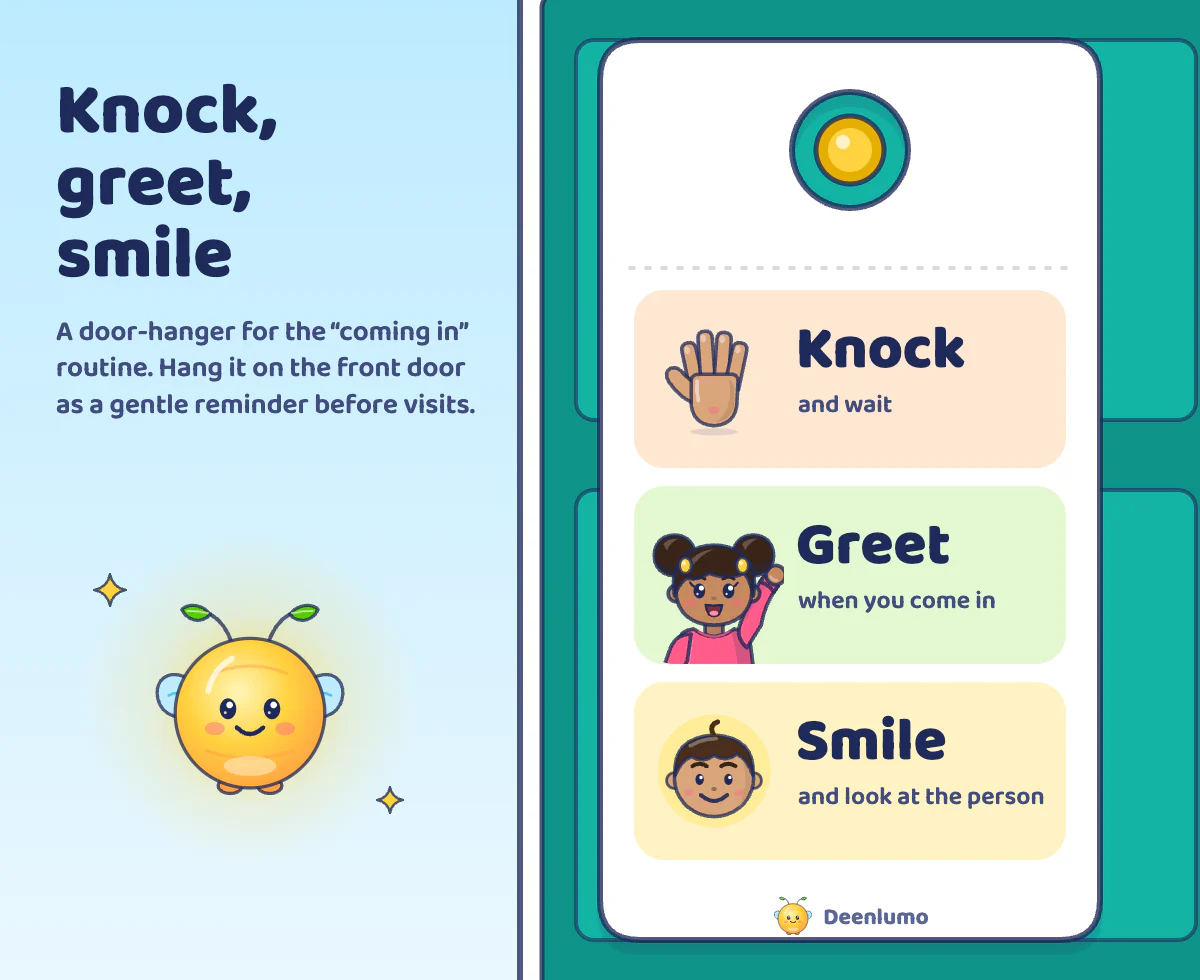
This little routine works at home, at Grandma's and at the masjid. Our guide to masjid manners for kids covers more.
FAQ
How do I teach my child to say salam?
Greet your child with salam yourself every day, especially when you come home and when they wake up. Practise with a quick role-play at the front door, and remind them gently before visits. Praise them when they greet someone without being asked. Daily repetition in real moments works better than practising out of context.
How should a child reply to salam?
The reply returns the greeting of peace, in the words your family uses. Teach children that replying is part of the greeting: when someone greets you, you look up, smile and reply. Practise both parts together so the reply becomes automatic.
What if my child is too shy to say salam?
Start small. A smile and a wave count. Let your child practise with family first, then with one familiar adult, and stand next to them for support. Never force or tease a shy child into greeting. Praise any step, such as a whispered reply, and give it time.
---
How we wrote this. This article was written by the Deenlumo team, based on the learning plans behind the Kindness Garden chapter. It covers the greeting as a daily manner. It doesn't quote religious texts, and it is waiting for review by a religious reviewer. For questions about your family's practice, ask your local imam or teacher.